
Category / CC41 & Utility
The CC41 mark was introduced by the British government during the Second World War as part of a wider effort to control the use of raw materials and ensure essential goods remained available to the public. “CC41” stood for “Controlled Commodity,” and the mark was applied to furniture, clothing, and textiles that met strict government regulations on design, material use, and price.
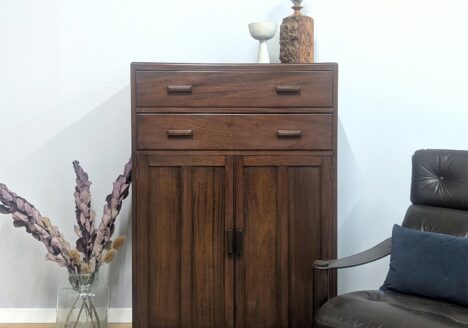
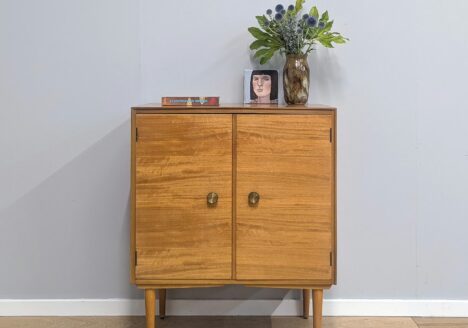
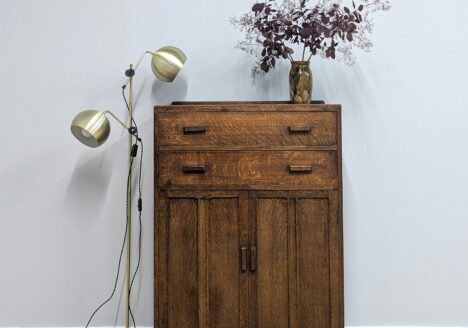
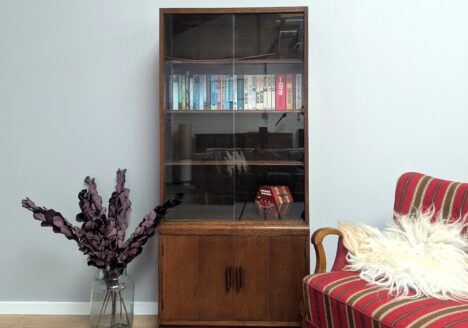
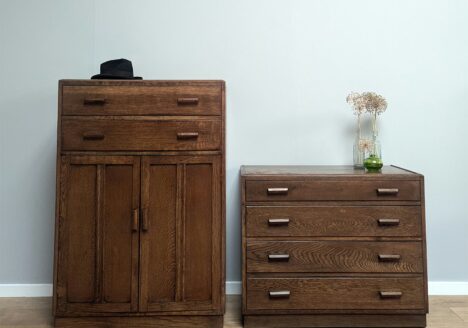
Utility furniture, produced under this scheme from 1942, was designed to be functional, economical, and durable. With timber supplies limited, the government restricted the use of decorative veneers and unnecessary ornament. As a result, furniture was typically made from solid woods such as oak or beech, with simple forms, straight lines, and minimal detailing. Standardised designs were approved by the Utility Furniture Advisory Committee, ensuring consistency and efficiency across manufacturers.
Despite these constraints, many pieces were thoughtfully designed, reflecting a quiet practicality that influenced later modernist aesthetics. Utility furniture was produced by a wide range of British manufacturers and was often issued to newly married couples or those who had lost homes during bombing.
The CC41 scheme continued into the immediate post-war years before being phased out in the early 1950s as material shortages eased. Today, CC41-marked furniture is valued for its historical significance, honest construction, and role in shaping Britain’s transition toward modern design.